How to extend a work-exchange visa in Morocco: what happens after your initial 90 days in Taghazout
Your 90-day tourist entry in Morocco is expiring and you're on a work-exchange. Here's what actually happens next: your legal options, the grey zones, and…
The BUNK Team
Work-for-stay travellers & hostel nerds
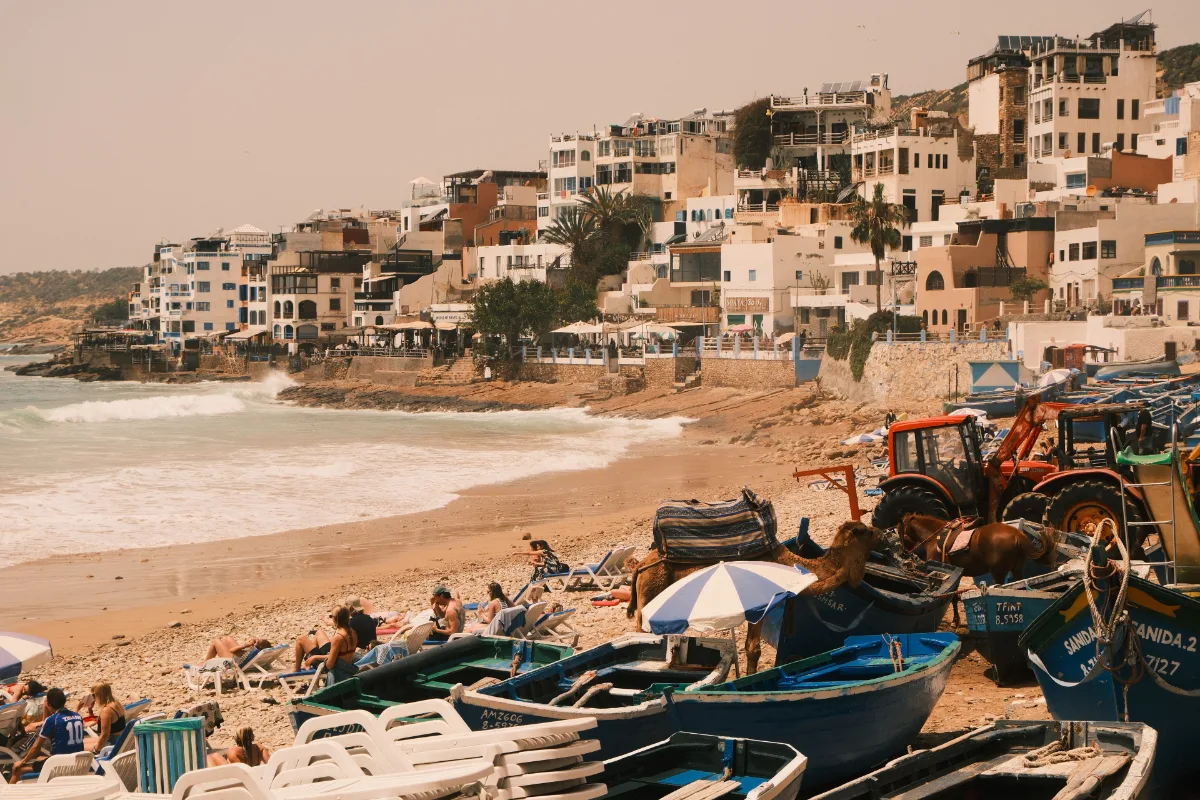
How to extend a work-exchange visa in Morocco: what happens after your initial 90 days in Taghazout
Sixty characters away from day 91 in Taghazout, and your tourist entry is expiring. You've found the rhythm here — the work-exchange gig is solid, the waves are good, and honestly, you're just getting comfortable. But your time on the initial 90-day entry is almost up. So what happens next?
The legal path depends on what visa status you actually have, and whether you want to stay on the work-exchange terms you've had so far or explore a different route. Here's what every volunteer in Taghazout needs to know before that 90-day window closes.
If you're a work-for-stay volunteer approaching your 90-day mark in Morocco, a plain visa extension won't solve the visa + income mismatch. You have three paths: apply for an extension before your time runs out (harder than it sounds), arrange a legal residence permit through your hostel employer, or leave and re-enter on a border run. Each has real trade-offs.
The 90-day rule: why it matters for work-exchange volunteers
Most Western nationalities get up to 90 days for visa-exempt entry in Morocco, and beyond that, you must request an extension from the police before this limit expires. If you arrived on a tourist entry (the default for most Europeans and North Americans), that 90-day clock started ticking from the moment you got your entry stamp.
The confusion starts here: a tourist stay can typically be extended once for up to another 90 days — it isn't indefinitely renewable as a way to live in Morocco long-term. A lot of BUNK volunteers think "I'll just extend once I get there," but the extension process is slower, stricter, and less reliable than that plan suggests.
Applying for a tourist visa extension: the legal path
If you want to stay longer within the tourist framework, apply at the Bureau des Étrangers (Foreigners' Office) at the local police headquarters — start the process at least 15 days before your current permitted stay expires, and bring your passport, proof of funds, a letter explaining your reason for extending, and any other requested documentation.
The catch: local immigration authorities decide whether you receive a few extra days or a full 90 days of extra stay. Approval isn't guaranteed. Paying just money does not guarantee an extension — police will first verify your documents and may still deny your request.
For a work-for-stay volunteer, the letter explaining your reason matters enormously. Being honest on the application — "I'm working in exchange for accommodation at [hostel name]" — might actually count against you on a tourist extension, since you're technically working without a work permit. Some BUNK hosts will write a letter of support saying you're volunteering for them; others won't touch it. You need to know where your hostel stands before the 90 days are nearly up.
The work-permit reality: what actually protects your stay
Here's the harder truth: any foreign national intending to engage in paid employment in Morocco is required to obtain a work permit, and this mandate applies to all non-citizens, regardless of the duration or nature of the employment. Work-for-stay sits in a legal grey zone. You're not being paid in cash, but you're providing labour — and that's functionally work.
Contractual volunteering is an activity in which people work voluntarily and without remuneration, and law 06.18 provides for the subscription of an insurance contract in the event of accident or contractual volunteering, covering the duration of the volunteering contract. The framework exists in Morocco. The question is whether your hostel is set up to use it — and most BUNK hostels aren't.
If the volunteer program lasts longer than 90 days, you may need to apply for a temporary residence permit or a specific visa through the NGO. Some organized volunteer programs handle this. Most work-for-stay exchanges don't, leaving you in a liminal space: you're not a tourist anymore (you're working), but you're also not on formal work authorization.
What BUNK volunteers actually do when 90 days is up
The three realistic routes are:
1. Border run (leave and re-enter)
Border runs to renew your 90-day visa in Morocco are not officially permitted, but it is certainly not frowned upon and to this day people do this without any problem. You cross into Spanish territory (Ceuta or Melilla), stay a few days, and re-enter Morocco. Your 90-day clock resets. You're back on a tourist entry, and you can do it once more if needed.
The practical trade-off: you lose income during the border run, your hostel loses you for a week, and you're betting that "not officially permitted" means you won't run into trouble. Most volunteers who do this have no problem, but it's genuinely not guaranteed.
2. Formal extension through the police
You apply, gather documents, and hope for approval. The visa extension process typically takes around 2 to 4 weeks, and the exact timing can vary depending on the type of visa, the volume of applications being processed, and any additional requirements. During that time, you keep working and stay in legal limbo (your extension request gives you some cover, but it's not a guarantee).
The barrier: being honest about the work-exchange arrangement might hurt your case. And even with perfect documents, the police can just say no.
3. Residence permit through your employer
If you're preparing to remain in Morocco for a prolonged duration, you should make an application for a residency card at the police precinct, ideally within the first 15 days of your stay. The difference from a tourist extension is that a residence permit is designed for people actually living in Morocco long-term — not visiting tourists.
For work-exchange to work on a residence permit, your hostel needs to formally sponsor you or at least provide the accommodation letter. A temporary work visa is issued for a maximum duration of 3 renewable months, intended for seasonal workers or those on short assignments. This is theoretically closer to what a hostel volunteer is doing. But it requires the hostel to go through the formal process — filing paperwork with the Ministry of Labour, proving no Moroccan national can fill the role, all of it. Most hostels don't.
The overstay risk: why you shouldn't ignore this
If you exceed your permitted stay without an approved extension, Moroccan immigration law treats this as a violation — consequences can include fines, being required to appear before a judge before you're allowed to leave the country, and potential future entry bans. This isn't hypothetical. People overstay, get caught at the airport, and face actual penalties.
The police will assess your situation and calculate your Morocco overstay fine, and they will issue a special exit document known as a laissez-passer once you pay the penalty, which you must present to passport control officers at the departure terminal.
Frequently asked questions
Can I just apply for an extension the day before my 90 days end?
No. Apply one to two weeks before your visa expires to avoid any legal trouble — this gives authorities enough time to process your paperwork. Filing at the last minute almost guarantees rejection because the police won't have time to review your documents.
What if I do a border run but the hostel wants me back on the work exchange?
You'll have another full 90 days on a new tourist entry. The same choices face you at day 90 again. If you're planning to stay 6+ months, border runs only buy you time — they don't solve the longer-term visa question.
Is work-for-stay legal in Morocco on a tourist visa?
Legally, no — any work (paid or unpaid) normally requires authorization. Practically, many hostels operate in this grey zone, and enforcement is inconsistent. But if you're planning to stay well past 90 days, the legal ambiguity becomes a real risk.
What should I ask my hostel host before I arrive?
Ask if they've hosted long-term work-exchange volunteers before, and what legal path they used. Ask whether they'd help with an extension letter, a residence permit application, or a border run arrangement. Ask what happens if your extension gets denied — do they cover cost of your flight out, or are you on your own? Most hosts won't have rehearsed answers, but asking tells you whether they're thinking about it.
